

By David Enna, Tipswatch.com
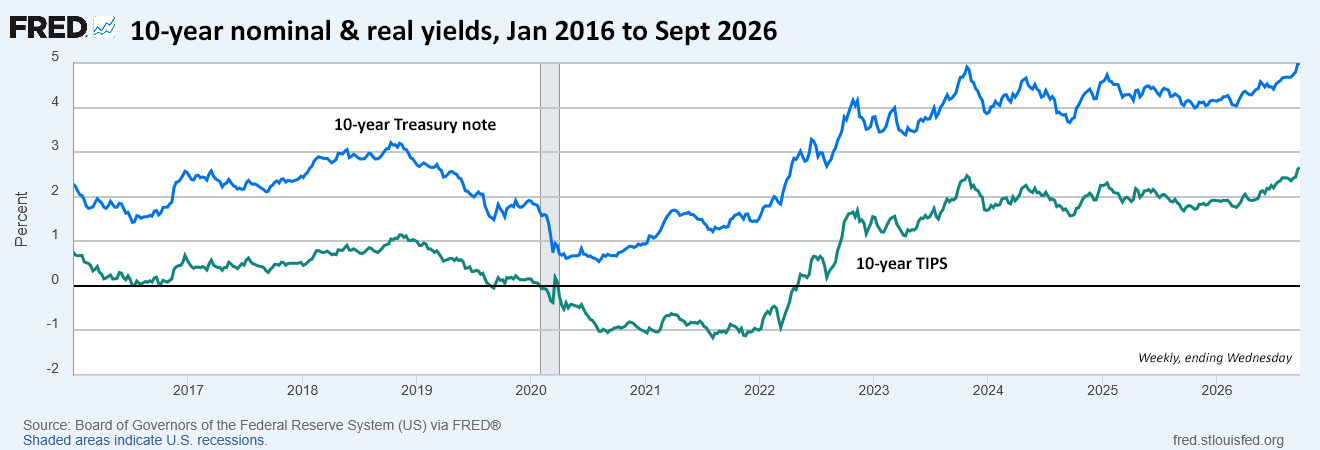
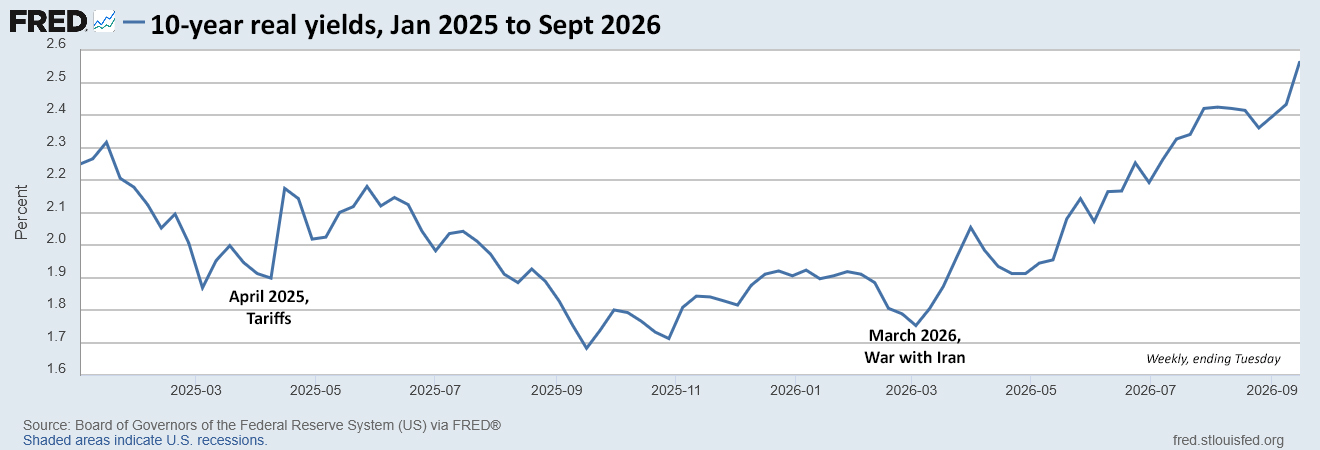
Talk about a contrary opinion: Real yields for Treasury Inflation-Protected Securities have risen to their highest levels in nearly 20 years and still we can easily find negative opinions on this unique investment.
The latest opposing view is from Ed Al-Hussainy, fixed-income portfolio manager for Columbia Threadneedle Investments. He was quoted in a recent Unhedged newsletter posted by the Financial Times:
The quip is ‘TIPS are for losers’ and it’s very hard to find evidence to challenge that. Often investors come to the TIPS market thinking it will protect them from inflation — that’s the intuitive power of TIPS. What can often happen [is that] you can get punished even more in the TIPS market than the nominal Treasury market because it’s so small and the investor base for that market is so thin relative to nominal Treasuries.
The newsletter’s author, Hakyung Kim, raised the obvious counterpoint, “But can’t these risks be avoided by holding to maturity?” Then:
Al-Hussainy notes, “everyone thinks they’re going to hold Treasuries until maturity, whether it’s TIPS or nominals”. Nobody plans to need liquidity all of a sudden, but sometimes they do. TIPS are just about 7% of the total Treasury market. … The lack of liquidity in the TIPS market compared to Treasuries creates wide bid-ask spreads when volatility goes haywire, making them look more like corporate bonds than a safe-haven government security, notes Brij Khurana of Wellington Management.
Kim closes with this:
If you’re confident inflation is set to run hot for years and are certain you can hold until maturity, TIPS might be a good bet. Otherwise, just buy plain old Treasuries.
The big picture
Kim’s newsletter article was actually quite positive about TIPS, pointing out the high real yields offered across the yield curve:
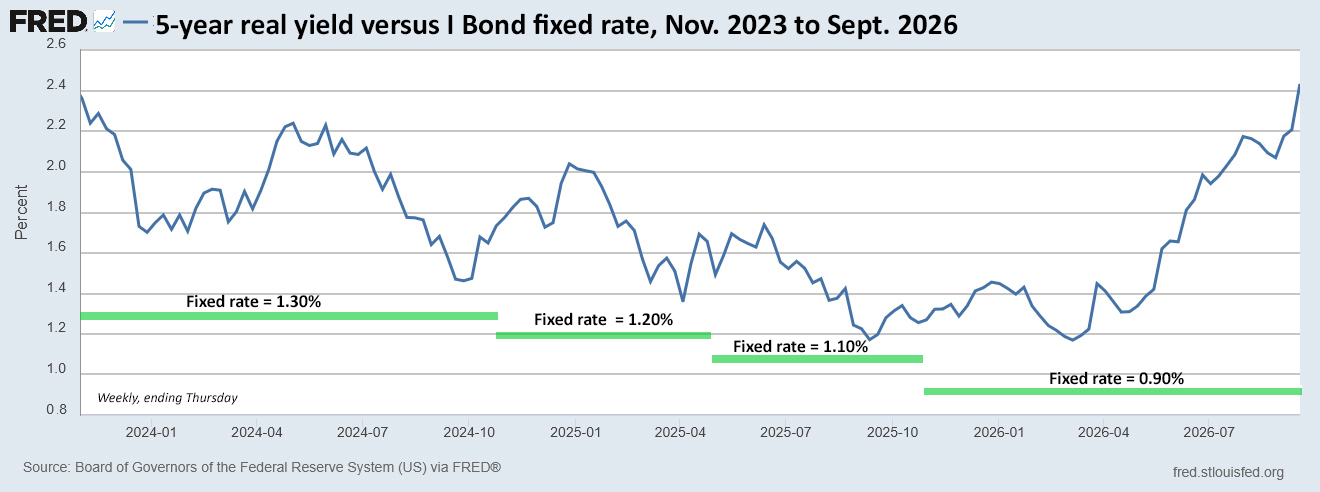
- 5-year, real yield of 2.68%, up 104 basis points since June 1.
- 10-year, real yield of 2.91%, up 84 basis points.
- 20-year, real yield of 3.17%, up 69 basis points.
- 30-year, real yield of 3.32%, up 61 basis points.
She wrote:
If held to maturity, those are compelling yields, especially if you think inflation is set to rise further.
And there is the key point. The best way to invest in TIPS, and the only way I participate in this market, is to buy with a firm intention to hold to maturity. This is the strategy used by the large community of TIPS ladder-builders, creating a packaged investment that can deliver a predictable and safe inflation-adjusted dollar amount in the future (plus collect a coupon rate along the way.)
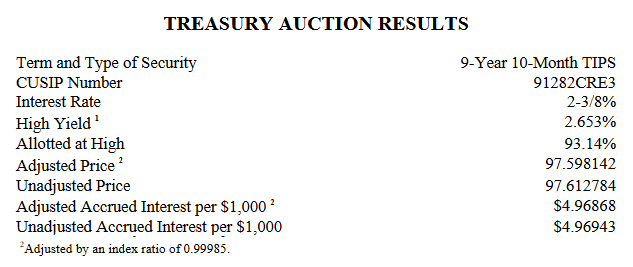
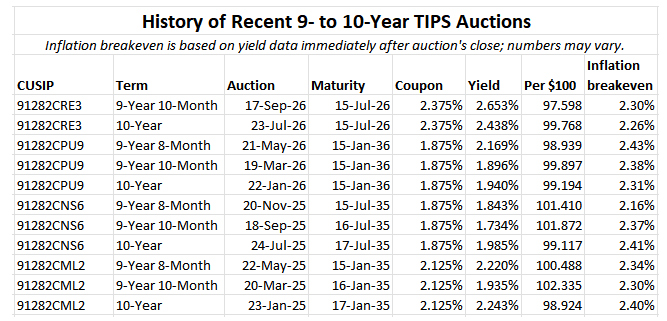
Invest $40,000 in a TIPS maturing in 2036, and at maturity you will get the inflation-adjusted equivalent of $40,000 at maturity. Plus an annual coupon payment of 2.375%, based on the most recent 10-year auction. The coupon pay-out will rise along with official U.S. inflation until maturity.
The latest update from Tipsladder.com says: “At current yields (as of 2026-10-09) a 30 year TIPS ladder can provide a Safe Withdrawal Rate of 5.1%, and a real yield of 3.2%.” This is highly attractive, and has been nearly impossible to attain for last 20 years. (Emphasis on safe.)
Kim then goes on to quote a highly positive Substack article written by respected economist Laurence Kotlikoff, with the title: “TIPS Are Screaming — Buy Me!” Kotlikoff writes:
The last half dozen years have witnessed a 30 percent inflation-generated effective default on nominal federal debt. Yet purchasers of nominal long-term Treasuries aren’t, it seems, worried about inflation long-term. …
To me, TIPS dominate nominal Treasuries. They have the same default risk, roughly the same tax treatment, and, given survey data, the same expected real return. But TIPS come with seemingly free insurance against a massive risk — another major bout of inflation. …
A strategy of buying and holding, through maturity, a portfolio of TIPS — building a TIPS ladder — appears the safest way to secure one’s retirement.
Aligned with this theme, Morningstar just posted an instructive article: “How to provide guaranteed retirement income while paying no commissions.” Among the points:
Unscrupulous financial planners want us to believe we can’t, by ourselves, secure our financial security for retirement – and therefore we need them to do it for us. That’s just not true, especially now, given the recent surge in TIPS yields.
The author, Mark Hulbert, provides a suggested way to build a TIPS ladder, and it makes sense to me:
The solution is to allocate only a portion of your retirement assets to a 30-year TIPS ladder and invest the remainder in a broad stock-market index fund that you don’t touch for 30 years. This approach extends the life of your guaranteed income to over 40 years.
TIPS haven’t been ‘losers’
I am not a fan of TIPS ETFs and mutual funds, but I can understand that for some investors this is the easiest solution to investing in TIPS. I do like the iShares iBond Target Date TIPS ETFs — which I wrote about here — because these ETFs have a specific maturity date and can be compared to TIPS held to maturity. The only complication is that for these ETFs, inflation accruals are paid out as current income and must be reinvested at a similar real yield.
But even traditional TIPS ETFs — rolling over a set series of maturities — have done “reasonably well” in recent years versus the total U.S. bond market. In this case, I want to highlight my favorite TIPS ETF: Vanguard’s Short-Term TIPS, ticker VTIP. This fund invests in TIPS maturing in less than five years, so the volatility is much lower than traditional broad-spectrum TIPS funds.
VTIP tends to track inflation better than the wider TIPS funds. It has less downside risk, and of course, less upside potential if real yields begin falling.
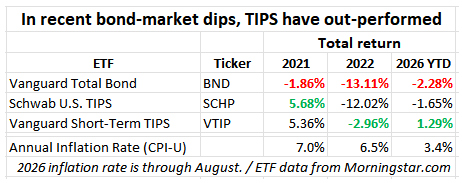
In all cases in these examples, the total U.S. bond market was the loser, falling a massive 13.1% in 2022, as inflation was rising 6.5%. VTIP was the best performer in this group, holding its loss to 2.96% in that year. Painful versus inflation, but not devastating. VTIP continues to out-perform in 2026.
In contrast, TIPS held to maturity gained 7.0% in inflation accruals in 2021, 6.5% in 2022 and 3.4% for the partial year of 2026. Yes, the market value of those TIPS declined, but remember this: At maturity, there is no such thing as “market value.” The investor gets:
Par value x inflation index + one final coupon payment.
For example, look at the 10-year TIPS that matured in July 2026. It was auctioned with a real yield to maturity of just 0.045%, and yet CUSIP 912828S50 outperformed a 10-year Treasury note purchased in July 2016 by a wide margin: An annual bonus of 1.86%. That is significant. The reason was unexpectedly high inflation over the ensuing 10 years. Read about this here.
Also: Check my ‘Tips Vs. Nominals’ page for historical data.
Conclusion
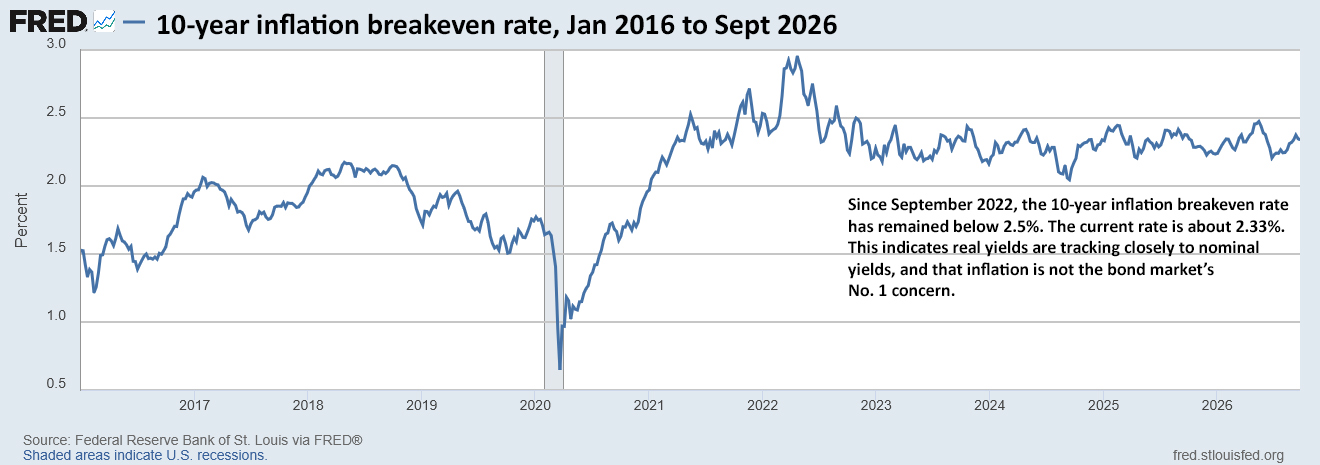
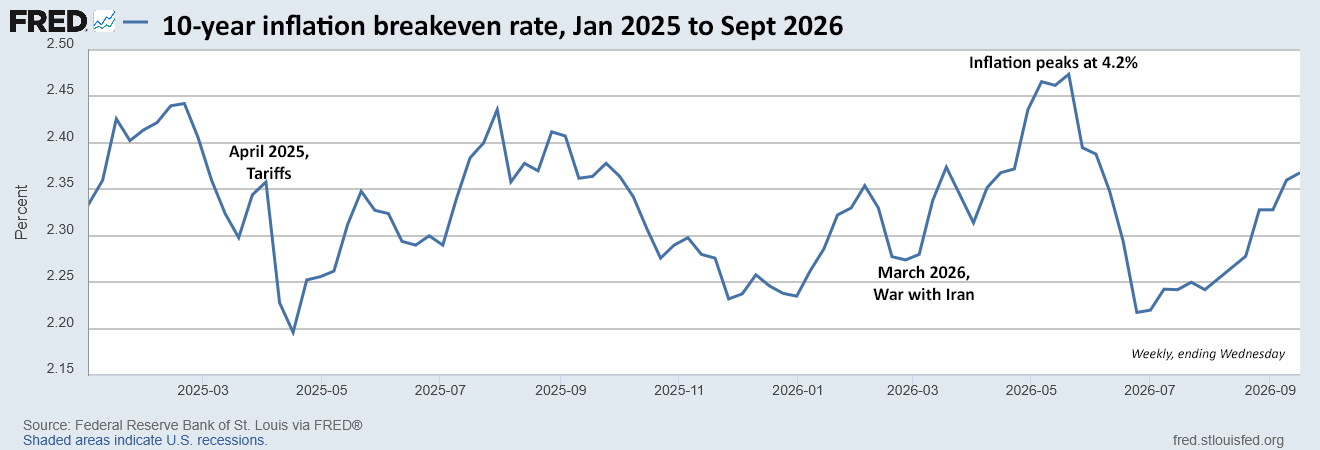
TIPS held to maturity will out-perform a similar-term nominal Treasury if inflation runs higher than expected. That expectation is currently around 2.35%, fairly high by historical standards but perfectly reasonable in 2026’s economic environment.
I am not against investing in nominal Treasurys — today’s yields cresting 5% are highly attractive. But I would tend to go nominal for five years or less, and use TIPS to do the heavy lifting of inflation protection.
Coming Wednesday …
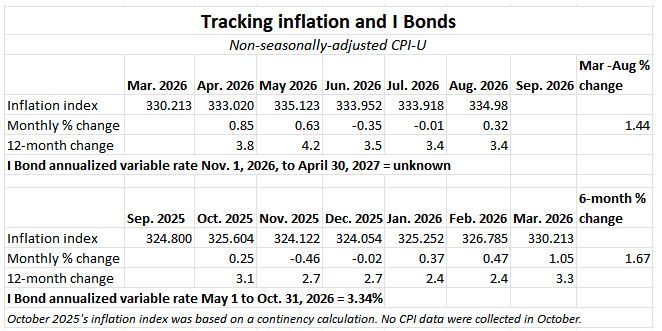
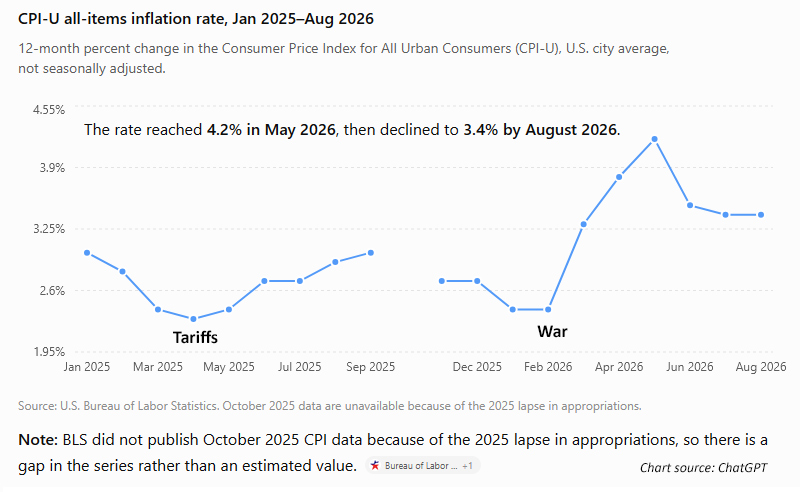
The most important inflation report of the year, for September 2026, will be released at 8:30 am ET. This report will set in stone the I Bond’s new variable rate, to be reset on November 1, and also determine the Social Security COLA for benefits paid in 2027. I will be posting Wednesday morning, possibly in a breaking news format that will update over a couple hours. Visit often!
• Now is an ideal time to build a TIPS ladder
• Confused by TIPS? Read my Q&A on TIPS
• TIPS in depth: Understand the language
• TIPS on the secondary market: Things to consider
• TIPS investor: Don’t over-think the threat of deflation
• Upcoming schedule of TIPS auctions
—————————

Donate? This site is free and I hope to keep it that way. Some readers have suggested having a way to contribute. I welcome donations, any amount. And FYI, ads on this site pay for about one visit to Costco.
—————————
Follow Tipswatch on X for updates on daily Treasury auctions and real yield trends (when I am not traveling).
Feel free to post comments or questions below. If it is your first-ever comment, it will have to wait for moderation. After that, your comments will automatically appear. Please stay on topic and avoid political tirades. NOTE: Comment threads can only be three responses deep. If you see that you cannot respond, create a new comment and reference the topic.
David Enna is a financial journalist, not a financial adviser. He is not selling or profiting from any investment discussed. I Bonds and TIPS are not “get rich” investments; they are best used for capital preservation and inflation protection. They can be purchased through the Treasury or other providers without fees, commissions or carrying charges. Please do your own research before investing.





My husband and I both have I bond accounts . Our bank accounts were scammed since we set up accounts…